


Ideas5 min read
Passion vs Profit: Why You Should Build a Business You Enjoy
What happens when the business you started to achieve financial freedom becomes the very thing that frustrates you? We…
 Precious Iloduba
 Precious Iloduba
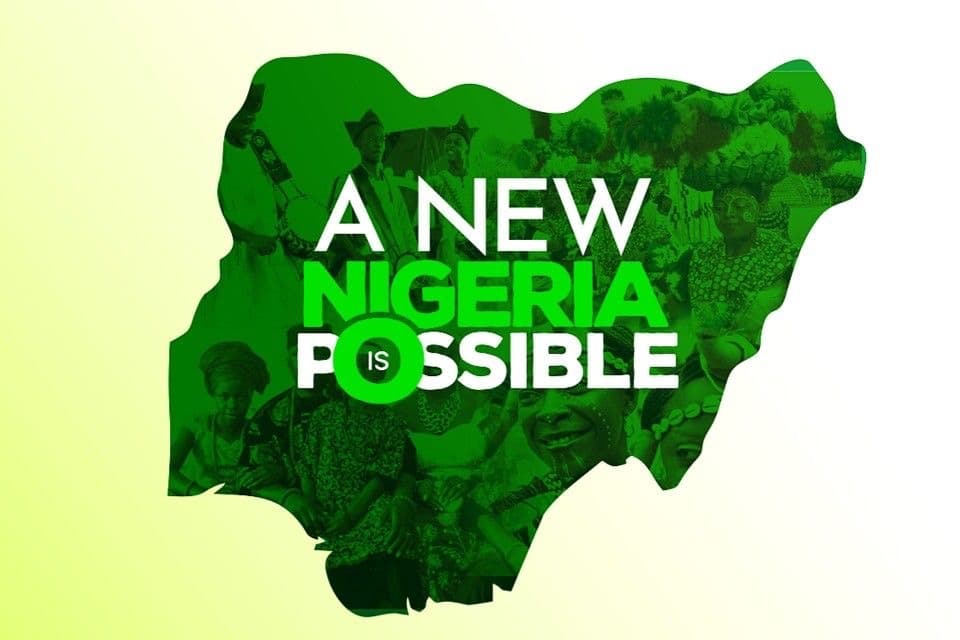
It’s so sad that on a day like this, the majority of Nigerians are not happy, there’s nothing to celebrate, there’s nothing to be happy about but there’s still hope for us. The upcoming elections determine a lot about our future; and, we are going to fight to make the right choice for us.Nigeria is 66, and despite the struggles Nigerians face, some things remain untouched.
To be a Nigerian currently is one of the worst things that can happen to a human being. Life in Nigeria is so complicated.
It is easy to look around and think about everything this country has taken from us. The money that no longer stretches as far as it used to. The plans that had to be postponed. The opportunities that never came. The rising cost of almost everything. The constant uncertainty that makes you think twice before making even ordinary plans.
For many Nigerians, the past few years have demanded a kind of patience that nobody really asked for.
And yet, somehow, we are still here.
Still laughing. Still creating. Still falling in love. Still getting married. Still having children. Still starting businesses. Still making music that travels across the world. Still gathering around food. Still dressing up for occasions that probably did not require that much dressing up in the first place.
Still saying, “God dey,” even when we have absolutely no idea how the situation will work out.
Today, October 1, Nigeria marks 66 years of independence. It is a day that naturally invites us to think about where we are, where we came from and where we are going. Nigeria’s independence came on October 1, 1960, and six decades later, the country is still trying to make sense of its enormous potential and its many challenges.
But perhaps today does not have to be another day of listing everything that is wrong with Nigeria.
We know.
Nigerians live the reality every day.
Perhaps today, we can talk about something else.
The things Nigeria hasn’t taken from us.
If there is one thing Nigeria has failed spectacularly at taking away from Nigerians, it is our sense of humour.
Honestly, it is almost unbelievable.
Give Nigerians a frustrating economy, a long queue, a power outage, terrible traffic or an embarrassing national situation, and someone will eventually turn it into a joke.
You can be having the worst day of your life and open social media to see a Nigerian making a meme about exactly what you are going through. Somehow, somebody has found the funniest possible way to describe the situation.
It is one of the things that makes Nigerian humour so special. We do not always laugh because things are good. Sometimes, we laugh because if we don’t, we might cry.
That humour is not a denial of reality. It is one of the ways people cope with it.
From the grandmother with a perfectly timed comment to the friend who can turn a serious situation into a five-minute comedy routine, Nigerians have a remarkable ability to find light in dark places.
And somehow, that light keeps spreading.
If anything, Nigerians have become even more creative in difficult times.
Walk through a Nigerian city and you will see people turning almost anything into an opportunity. Someone is selling food from a small kitchen. Someone is making wigs. Someone is designing clothes. Someone is baking cakes from home. Someone is writing online. Someone is learning graphics design. Someone is building an app. Someone is creating content with a phone.
There is always somebody trying something.
Our creativity also goes far beyond making money.
Nigerians have given the world music, films, fashion, literature, art, comedy and stories that have travelled far beyond our borders. Nigerian artists and creators continue to shape global conversations about African culture and identity.
And perhaps the most interesting part is that this creativity does not always come from perfect conditions.
Sometimes it comes from a bedroom.Sometimes from a roadside shop.Sometimes from an old laptop that should have retired three years ago.Sometimes from a young person who simply decided, “Let me try.”
Nigeria has never had a shortage of people who can create.
This might be one of the most underrated things about Nigerians.
We start again.
We lose a job and start looking for another one. A business fails and we try something else. An application is rejected and another one is submitted. A relationship ends and, eventually, life continues. Something doesn’t work out and somehow, we wake up the next morning and start figuring things out again.
It is easy to call this resilience, and Nigerians are often praised for being resilient.
But there is an important distinction.
We should not romanticise suffering. People should not have to constantly struggle just to survive, and being resilient should never become an excuse for poor systems or unnecessary hardship.Still, there is something remarkable about the way ordinary Nigerians keep moving.
There is the young graduate sending another job application.There is the woman opening her food business again after a difficult month.There is the father trying to provide for his family despite rising expenses.There is the student learning a new skill because they want more options.There is the person who has been disappointed several times but still believes the next opportunity could be different.
Nigeria may have made life difficult for many people.But it has not completely killed their willingness to try again.
There is something about the Nigerian community that is difficult to explain until you have experienced it.
Someone can complain about Nigeria all morning and still rush to help a neighbour in the afternoon.
We may argue about our differences, but when someone is getting married, having a baby, celebrating a birthday or burying a loved one, people show up.
Sometimes, they show up with money.Sometimes, with food.Sometimes, with prayers.Sometimes, they simply sit beside you.
Family gatherings can be chaotic. Neighbours can be annoying. Nigerian extended families can have enough opinions to run a small government.But there is still a sense that people belong to one another.
The auntie who sends food home.The friend who transfers money when you are stranded.The neighbour who watches your house while you travel.The church member who checks on you when you disappear for a few Sundays.The colleague who quietly sends you a job opening.
These little things rarely make the news, but they are part of Nigeria too.
Nigerians will celebrate.
Let something good happen and somehow, somebody will find a way to make it an event.
A graduation can become a photoshoot. A birthday can become a small festival. A wedding can become a three-day programme. A baby’s naming ceremony can involve enough food to feed a small neighbourhood.
And Nigerians know how to dress for these occasions.Even when life is difficult, people still find reasons to gather.There is something beautiful about that.
Celebration does not necessarily mean everything is perfect. Sometimes, it simply means people have decided that one good thing deserves to be acknowledged.
And perhaps that is important.
When life gives you very few reasons to celebrate, you learn to appreciate the ones you have.
Spend a little time around young Nigerians and one thing becomes obvious: people still have dreams.
Big dreams.
Someone wants to build a company. Someone wants to become a doctor. Someone wants to make films. Someone wants to own a farm. Someone wants to become a fashion designer. Someone wants to write books. Someone wants to become a musician. Someone wants to work remotely and earn in dollars. Someone wants to build a house for their parents.
Some want to leave the country. Others want to stay and build something here.
But underneath all those different choices is something similar: the desire for a better life.
That desire has not disappeared.
If anything, it is one of the reasons so many Nigerians continue to work, learn and take risks despite how difficult the environment can be.
There is still ambition in this country.
There are still people who believe their lives can become bigger than their current circumstances.
Our culture has travelled with us.
It is in the food we cook when we move abroad. It is in the names we give our children. It is in the clothes we wear to weddings. It is in the music we play at parties. It is in the languages we speak at home.
It is in the way an Igbo mother, Yoruba father, Hausa grandmother or Edo uncle can make you feel at home with something as simple as food or conversation.
Nigeria is made up of many cultures, languages, traditions and identities, and sometimes our differences receive more attention than what connects us.
But there is something powerful about how Nigerian culture continues to evolve without disappearing.
Afrobeats has travelled the world. Nigerian fashion has become increasingly visible internationally. Nollywood continues to tell Nigerian stories to global audiences. Nigerian food is finding its way onto more tables outside the country.
Our culture is still alive.It is still changing.
And it is still ours.
Maybe this is the biggest one.
Hope.
Not the naïve kind that pretends everything is fine.
The kind that says, “Things are difficult right now, but they can still get better.”
There is a reason Nigerians keep planning.
People still save for houses. They still apply for jobs. They still start businesses. They still fall in love. They still have children. They still go to school. They still make five-year plans.People do not do these things because Nigeria has given everyone a perfect reason to be optimistic.
They do them because somewhere inside them is the belief that tomorrow can be different from today.And perhaps that is what Independence Day should remind us of.Not that Nigeria is perfect.It isn’t.
Not that Nigerians should stop demanding better.We shouldn’t.Not that hardship is something to be grateful for.It isn’t.But that the country is still made up of millions of people who are creating, dreaming, helping, laughing and trying.
You can be frustrated with Nigeria and still love Nigeria.
Those two things are not opposites.
You can complain about the electricity and still dance to Nigerian music.
You can be angry about the cost of living and still be proud when a Nigerian succeeds somewhere in the world.
You may want to leave the country and still miss your mother’s food before your flight has even landed.
You can criticise the government, question the system and demand accountability while still wanting Nigeria to become a better place.
In fact, sometimes criticism comes from caring.
When you believe a person or a country can do better, disappointment becomes unavoidable when it doesn’t.
So perhaps loving Nigeria does not mean pretending that everything is okay.
Perhaps it means caring enough to want things to change.
Sixty-six years after independence, Nigeria has a complicated story.
There have been achievements, disappointments, difficult periods, remarkable people, missed opportunities and moments that have made Nigerians proud. Even official Independence Day reflections over the years have acknowledged both the country’s challenges and the determination of its people. (State House Abuja)
So today, we do not have to choose between blind patriotism and complete hopelessness.
There is another option.
We can be honest about where Nigeria is while still believing in where Nigeria can go.
We can acknowledge the problems without allowing the problems to become the entire Nigerian story.
Because Nigeria is not only the price of rice.
Nigeria is not only the exchange rate.
Nigeria is not only bad roads, insecurity, unemployment, electricity problems or political disappointment.
Nigeria is also the woman waking up before dawn to prepare food for her customers.
It is the young man learning a skill after work.
It is the student studying under a rechargeable lamp.
It is the grandmother feeding everyone who enters her house.
It is the artist creating something beautiful.
It is the friend who sends money without being asked.
It is the child who still believes they can become anything.
It is the Nigerian who, after everything, still says, “One day, things will be better.”
Maybe that is what we should hold on to today.
Nigeria has taken a lot from us.
But it has not taken our humour.
It has not taken our creativity.
It has not taken our community.
It has not taken away our ambition.
It has not taken our culture.
And most importantly, it has not taken away our hope.
And this is why come 2027 elections, we must all come out in big numbers to choose better for us this time around!
Vote Peter obi!!!
For a better Nigeria!
Thank you.
Get thoughtful stories, useful ideas, practical insights and fresh perspectives on life, money, health, work and everything in between straight to your inbox.
What happens when the business you started to achieve financial freedom becomes the very thing that frustrates you? We…
Precious Iloduba
There is a sentence I have heard quite a lot lately: “Marriage is not for me.” If you go on tiktok or Twitter, there’s…
 Precious Iloduba
Now that the trending cheating and marriage scandal has gone down, can we talk about how relationships have lost their…
 Precious Iloduba
Comments