



Ideas5 min read
Passion vs Profit: Why You Should Build a Business You Enjoy
What happens when the business you started to achieve financial freedom becomes the very thing that frustrates you? We…
 Precious Iloduba
 Precious Iloduba
Introduction
One of the hardest things to do currently as an average Nigerian is to save money. What’s the minimum wage? What’s the salary pay like? How are civil servants coping?
Between feeding, transportation, electricity bills, data subscriptions, family responsibilities, and the occasional expense you never planned for, money can finish before you even realise how much you’ve spent. Sometimes, you receive money and already have a list of things waiting to collect it. Before you know it, you’re wondering how you managed to spend so much in such a short time.
And then something happens.
Your phone suddenly develops a fault. You fall sick and need to pay for treatment. You lose a source of income, or an unexpected bill shows up at a time when your account is already looking somehow.
Naturally, you reach for your savings. But what happens when the money you have been saving for something important is the same money you need to solve an urgent problem?
This is where understanding the difference between an emergency fund and regular savings becomes important.
A lot of people think they are the same thing, and honestly, I can understand why. Both involve keeping money aside instead of spending everything you earn. But even though they serve similar purposes, they are not meant to do the same job.
And if you’ve ever had to abandon a personal goal because an unexpected expense came up, understanding this difference might change how you manage your money.
What Is Savings?
Savings is simply the money you keep aside for something you want or plan to do in the future.
It could be money you’re putting together to buy a new phone, pay for a course, start a business, move into your own apartment, travel, or finally get that laptop you’ve been wanting for months.
You have a goal in mind, and rather than waiting until you have all the money at once, you gradually put something aside until you can afford it.
For instance, let’s say you earn ₦200,000 monthly and want to buy a laptop worth ₦500,000. You decide to save ₦50,000 every month. If you stay consistent and don’t touch the money for other things, you’ll have enough in ten months.
That is savings.
The beautiful thing about saving is that it allows you to prepare for the things you want instead of constantly depending on whatever money happens to be available at the time.
However, there is something worth paying attention to. Money you have saved for a specific goal should not automatically become the money you use for every unexpected expense.
Imagine saving for six months to pay your school fees, only to have to use the money to repair your car because you have nothing else to fall back on. The car gets fixed, but now you’re back to figuring out how to pay your fees.
The problem isn’t that you saved. The problem is that the money you saved for one purpose had to carry a responsibility it wasn’t originally meant for.
And that brings us to emergency funds.
What Is an Emergency Fund?
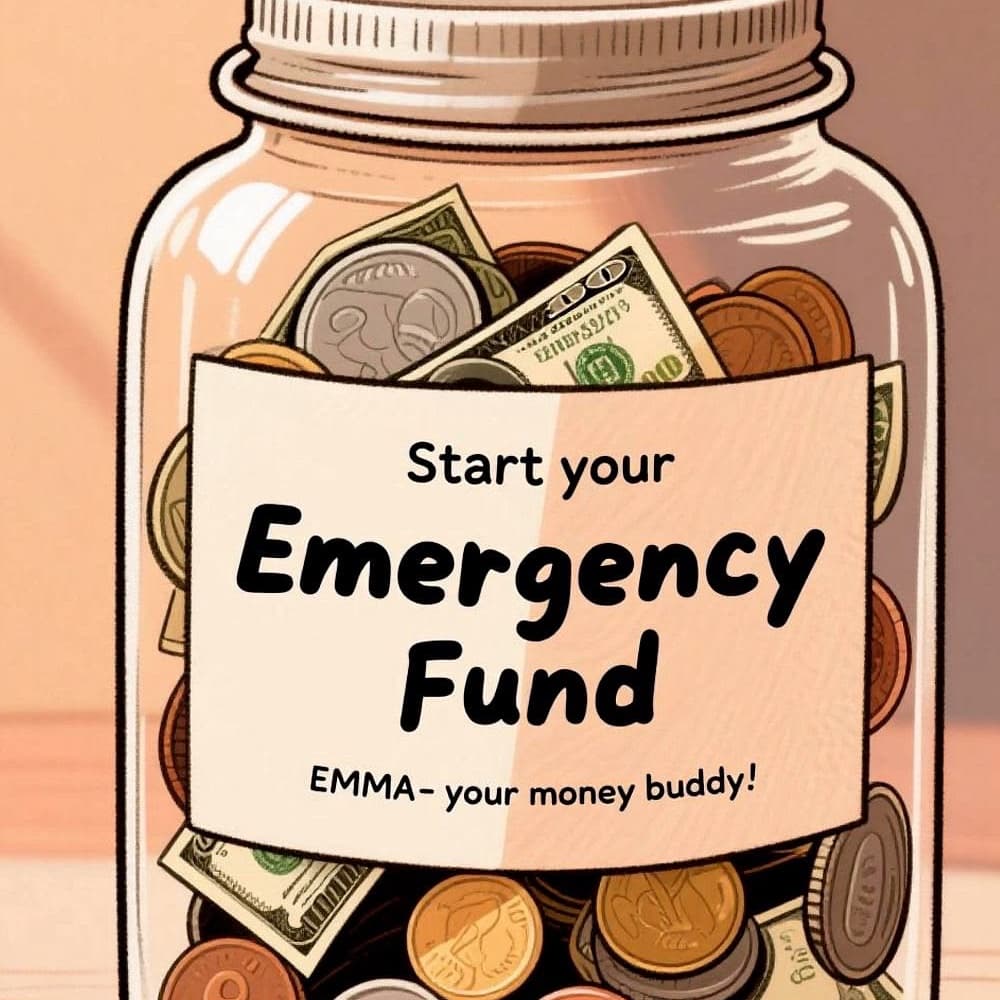
An emergency fund is money you deliberately set aside for unexpected expenses that you cannot conveniently handle with your regular income.
Notice the word unexpected.
This isn’t money you’re keeping for your next vacation, a new outfit, your birthday celebration, or that business idea you’ve been planning. Those things may be important to you, but they are generally expenses you can anticipate and plan for.
An emergency fund is for the moments when life happens and you need money quickly.
Let’s say you run a small business and depend on it for your daily income. Suddenly, your laptop develops a serious fault, and you need it to continue working. If you have an emergency fund, you can pay for the repair without immediately reaching for money you have set aside for rent or another important goal.
Or perhaps you lose your job. Your salary stops coming in, but your expenses don’t suddenly disappear. You still need to eat, pay for transportation, settle bills, and take care of yourself while looking for another source of income.
Your emergency fund can help you manage that period without immediately borrowing money or exhausting all your other savings.
Of course, not every unexpected expense is a financial emergency. A flash sale on your favourite online store is not an emergency, even if the discount is tempting. Neither is buying something simply because you suddenly want it.
An emergency fund requires you to understand the difference between something you want right now and something you genuinely need to deal with an unexpected situation.
The purpose of an emergency fund is to give you somewhere to turn when your regular income or existing budget cannot comfortably handle an urgent expense.
It doesn’t mean you will never experience financial difficulties. It simply means you have made some preparation for them.
So, What’s the Actual Difference Between an Emergency Fund and Savings?
The easiest way to understand it is to look at what each one is supposed to do.
Regular savings helps you prepare for your plans. An emergency fund helps you deal with unexpected financial problems.
Let’s say you’re saving for three things: a new laptop, a trip, and your own apartment. These are goals you can plan towards, even if you don’t know exactly when you’ll achieve all of them.
Now imagine that you suddenly need medical treatment or your source of income disappears.
Your regular savings might be useful in that situation, but using it could delay all the plans you have been working towards. An emergency fund gives you another option.
There is also a difference in how you approach the money.
With regular savings, you may be comfortable investing towards a goal with a specific timeline, depending on the type of account or investment you choose. With an emergency fund, access to your money matters much more. You don’t want to discover that the money you need for an urgent hospital bill is locked away in an investment you cannot withdraw from immediately without a penalty or loss.
This doesn’t mean your emergency fund must sit carelessly in your everyday spending account. It simply means you should keep it somewhere reasonably safe, accessible, and separate from the money you use for daily expenses.
Think of it this way: your savings help you move towards the life you want, while your emergency fund helps you handle the unexpected expenses that could disrupt it.
Both matter, and one does not make the other unnecessary.
How Much Should You Have in Your Emergency Fund?
This is where many people start feeling discouraged.
You hear financial experts talk about saving three to six months of living expenses, and if you’re already struggling to make your income stretch until the end of the month, that figure can feel almost impossible.
But here’s something worth remembering: you don’t have to build the entire fund at once.
The three-to-six-month guideline is a common target, not a requirement you must meet before you can start benefiting from an emergency fund.
If your essential monthly expenses are ₦150,000, for example, three months of expenses would be ₦450,000, while six months would be ₦900,000.
Those figures may seem like a lot, especially if your income is limited or inconsistent. But you can work towards them gradually.
Your first goal could be ₦20,000. After that, you could aim for ₦50,000, then ₦100,000, and continue building from there.
Even a small emergency fund can make a difference when an unexpected expense comes up. It might not cover everything, but it could reduce how much you need to borrow or how much of your regular savings you have to touch.
Once you have a small cushion, you can work towards a larger amount that reflects your actual circumstances.
Your ideal emergency fund will depend on several things, including your monthly expenses, job security, family responsibilities, health needs, and how predictable your income is.
Someone with a stable salary and few financial responsibilities may have different needs from someone who is self-employed, supports family members, or earns money irregularly.
If your income changes from month to month, you may want to work towards a larger safety net because you cannot always predict when your next payment will arrive.
The important thing is to choose a target that makes sense for your life instead of abandoning the idea because you cannot afford to save hundreds of thousands of naira immediately.
Let’s talk about the part that matters most: actually doing it.
It’s easy to tell people to save money. It’s a different conversation when your income already has too many responsibilities attached to it.
So, rather than telling yourself that you’ll start saving when you earn more, start by looking at what you can realistically do with what you currently have.
Before deciding how much you need in an emergency fund, you need to understand how much it costs to maintain your basic needs.
Think about your food, accommodation, transportation, electricity, medication, and other essential expenses. These are the expenses you would still need to cover if your income suddenly stopped.
You don’t have to calculate everything perfectly on your first attempt. Start with a reasonable estimate and adjust it as you understand your spending better.
This gives you a clearer idea of how much money you would need to support yourself during a difficult period.
You don’t have to save ₦50,000 every month simply because someone on social media says that’s what you should be doing.
If you can comfortably put aside ₦5,000, start there. If you can save ₦10,000 without neglecting your essential needs, that works too.
What matters is finding an amount you can sustain.
For example, saving ₦10,000 monthly gives you ₦60,000 after six months, excluding any interest. It may not be enough to cover several months of expenses, but it is money you would not have had if you had never started.
And if your income increases later, you can increase the amount you save.
Have you ever kept money for a particular purpose, only to spend it because it was sitting in the same account you use every day?
It happens. When money is easily accessible, it can be tempting to use it for things that were never part of the plan.
Keeping your emergency fund separate from your regular spending money can help you avoid this.
You could use a separate savings account or another suitable financial product, provided your money is secure and you can access it when necessary.
Before choosing where to keep it, check the withdrawal conditions, fees, applicable protections, and whether there are restrictions that could prevent you from getting the money when you need it.
Remember, this is your emergency fund. Accessibility is an important part of its purpose.
If you wait until the end of the month to see what remains, you may discover that nothing remains.
One approach is to decide how much you want to save when you receive your income, after accounting for your essential obligations. This could be a fixed amount or a percentage that changes depending on what you earn.
If you’re self-employed or your income is irregular, you can save a portion whenever a payment comes in rather than relying on a fixed monthly salary.
You don’t have to follow a rigid rule. The idea is to make saving part of your financial routine instead of something you only do when you happen to have extra money.
Let’s say you have managed to save ₦200,000, and then an unexpected expense forces you to withdraw ₦80,000.
You now have ₦120,000 left.
Don’t feel as though you’ve failed at saving. The money served the purpose you had been preparing it for.
When your financial situation allows, begin rebuilding the fund. You can return to your usual contributions or temporarily increase them if doing so won’t put pressure on your essential expenses.
An emergency fund is there to be used when a genuine emergency occurs. You shouldn’t feel guilty for using it for the very reason you created it.
Should You Save or Build an Emergency Fund First?
If you’re starting from scratch, you might be wondering which one deserves your attention first.
The answer depends on your situation, but if you have no emergency fund at all, building a small financial cushion is a sensible place to start.
You don’t necessarily have to abandon every other savings goal while doing this. If your income allows it, you can divide your money between your emergency fund and your other priorities.
For instance, imagine you can set aside ₦20,000 monthly after covering your essential expenses. You might decide to put ₦15,000 towards your emergency fund and ₦5,000 towards a personal goal.
If your emergency fund is completely empty and you have dependants or an unpredictable income, you may choose to prioritise it more heavily for a while. On the other hand, if you have an urgent planned expense, you may need to balance both goals differently.
What matters is understanding the role each pot of money plays in your life.
You also need to remember that saving should not come at the expense of essential needs. If you are struggling to afford food, medication, or housing, those immediate needs deserve attention. You cannot build a healthy financial foundation by neglecting your basic wellbeing to meet an arbitrary savings target.
Start where you are, make a realistic plan, and adjust it as your circumstances change.
Where Should You Keep Your Emergency Fund in Nigeria?
In Nigeria, where prices can change quickly and many people have financial responsibilities beyond themselves, keeping an emergency fund requires a little thought.
You want somewhere that protects your money while allowing you to access it when you need it.
A suitable savings account may work for you, especially if you can withdraw your money easily and the fees are reasonable. Some people may prefer an eligible interest-bearing savings product, but you should check its terms carefully before using it for emergencies.
Avoid placing money you might need urgently into an investment that locks it away for a fixed period or exposes it to significant market fluctuations.
For example, stocks may be useful for long-term investment goals, depending on your circumstances and risk tolerance, but their value can fall just when you need cash. Selling during a downturn could mean accepting a loss.
An emergency fund serves a different purpose from an investment portfolio. You are not primarily trying to maximise returns with this money; you are trying to make sure it is available when life becomes financially unpredictable.
Also, be mindful of inflation. Money that sits untouched for a long time can lose purchasing power as prices rise. Once you have built a reasonable safety net, you can review the amount periodically to see whether it still reflects your current living expenses.
There is no single account that is perfect for everyone. Choose a secure, suitable option based on accessibility, costs, applicable deposit protection, and the conditions attached to withdrawals.
One mistake is treating every amount of money in your account as money available to spend. You might have ₦300,000 in the bank, but if ₦200,000 is meant for rent and ₦50,000 is your emergency fund, you don’t really have ₦300,000 available for shopping.
Another mistake is setting a savings target that is completely unrealistic for your income. It may feel motivating at first, but if you constantly have to withdraw the money to cover basic expenses, the plan may need adjusting.
You should also avoid dipping into your emergency fund for every inconvenience. A genuine emergency is an unexpected expense that needs attention and cannot reasonably wait or be covered through your normal budget. A planned purchase, a social outing, or an impulse buy usually belongs somewhere else.
And please, don’t compare your savings with someone else’s.
You may see people online talking about saving millions of naira, buying properties, or building investment portfolios before a certain age. You don’t always know their income, responsibilities, debts, family support, or the circumstances behind their progress.
Use financial advice to improve your own decisions, not to make yourself feel like you’re failing because your journey looks different.
The goal is to build a financial system that works for your life.
Is an emergency fund the same as savings?
No. Both involve setting money aside, but they serve different purposes. Regular savings is usually for planned expenses and financial goals, while an emergency fund is intended for unexpected, urgent expenses.
How much should I save in an emergency fund in Nigeria?
A common target is three to six months of essential living expenses. However, you can begin with a smaller amount and build gradually, depending on your income, expenses, job security, and family responsibilities.
Can I use my emergency fund for rent?
If your rent is a known, recurring expense, you should ideally save for it separately. However, if an unexpected situation leaves you unable to meet an essential housing payment, you may need to consider using your emergency fund. The key is to rebuild it when your circumstances allow.
Should I invest my emergency fund?
Your emergency fund should generally be kept in a secure, accessible place rather than investments that could lose significant value or prevent you from withdrawing your money when needed. Long-term investments and emergency funds have different purposes.
What if I cannot afford to save every month?
Start with what you can manage. If your income is irregular, you could save a small portion whenever you receive money. If your expenses currently consume everything you earn, review your budget where possible and focus on your immediate needs before setting an unrealistic target.
In conclusion?
One thing I think we need to understand about money is that earning it is only part of the picture. Knowing how to manage it, plan for the future, and prepare for unexpected situations matters too.
You can be earning a decent income and still find yourself in a difficult financial position if every naira already has somewhere to go and you have nothing to fall back on when plans change.
An emergency fund will not prevent every financial problem, and savings will not automatically make you financially secure. But having a plan for both can give you more options when you need them.
You don’t have to start with a huge amount of money. You don’t have to figure everything out this month, either.
Start small, be intentional about what you save for, and learn to give your money a purpose before you spend it.
Because sometimes, financial peace is not just about having more money. It’s also about knowing that when something unexpected happens, you have somewhere to begin.
Get thoughtful stories, useful ideas, practical insights and fresh perspectives on life, money, health, work and everything in between straight to your inbox.
What happens when the business you started to achieve financial freedom becomes the very thing that frustrates you? We…
Precious Iloduba
If you have been checking your investment app this week and wondering why some of your Nigerian stocks are slipping…
 Precious Iloduba

There is a sentence I have heard quite a lot lately: “Marriage is not for me.” If you go on tiktok or Twitter, there’s…
 Precious Iloduba
Comments