



Lifestyle16 min read
Your 20s and 30s: The Foundation of a Healthy Life
There is something many of us believe when we are young: that our bodies will always forgive us. We can eat whatever we…
 Precious Iloduba
 Precious Iloduba
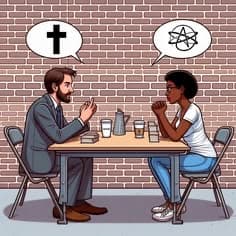
Few months ago, I wrote an article on deconstructing religion and Christianity and how they are not the same thing. Months later, I’ve fully understood what I was trying to talk about in those articles. I was confusing myself by trying to explain the difference between religion and Christianity, and while I was not totally wrong, this article is a clearer vision to what I was trying to explain; let’s get into it.
There is a point in many people’s lives when they start questioning things they once accepted without thinking too deeply about them. Sometimes it happens quietly. Sometimes it happens after a major experience. And sometimes it happens because one small question refuses to leave you alone. You hear something in church, read something in the Bible, have a conversation with someone, or come across an entirely different perspective online, and suddenly you find yourself thinking, “Wait. Why do I actually believe this?”
For someone who grew up religious, especially someone who grew up in a Christian environment, that question can be much bigger than it sounds. Religion is rarely just a collection of beliefs. It can be connected to your family, your childhood, your friendships, your values, your idea of right and wrong, your understanding of God, your fears, your hopes, and even your identity. So when you start questioning one part of it, you may eventually find yourself questioning several other parts too.
This is where the word deconstruction often comes into the conversation.
And this is also where things can get confusing because people sometimes hear someone say, “I’m deconstructing my faith,” and immediately assume, “So you’re becoming an atheist.”
Not necessarily.
In fact, deconstruction and atheism are two very different things, even though they can sometimes be connected. One describes a process of questioning and examining beliefs, while the other describes a position concerning belief in God or gods. A person can go through religious deconstruction and remain a Christian. Someone can go through deconstruction and eventually become atheist. And someone can be an atheist without ever having gone through religious deconstruction at all.
Understanding that difference matters because we often assume we know where someone’s questions are going to lead them before they have even figured it out themselves.
So, What Exactly Is Deconstruction?
Think about something you have believed for most of your life. Maybe nobody ever sat you down and gave you a detailed explanation for why you believed it. You simply grew up hearing it.
Your parents believed it. Your church believed it. Your pastor taught it. Everyone around you seemed to agree. So naturally, you believed it too.
This happens to all of us, not just with religion. We inherit ideas about relationships, money, success, family, culture, morality and even what it means to be a “good person.” We don’t always consciously choose these ideas. A lot of the time, they are simply handed to us.
Religion can work the same way.
Maybe you grew up hearing that the Bible says a particular thing. Maybe you were taught that a certain behavior is a sin. Maybe you were told that your denomination had the correct understanding of Christianity and everyone else was wrong. Maybe you were taught that questioning your faith was dangerous, or that doubt was a sign that you were becoming distant from God.
As a child, you probably weren’t sitting there checking the sources and asking for evidence. You trusted the people teaching you.
But then you grow older.
You begin thinking for yourself. You encounter people who believe differently. You read something you were never exposed to before. You discover that Christians themselves disagree about things you once thought were completely settled. You start noticing that some things you were told were directly from the Bible may actually be someone’s interpretation of the Bible.
And then you start asking questions.
Not necessarily because you want to leave Christianity. Not necessarily because you hate religion. Sometimes you are asking because you genuinely want to know what you believe when nobody else is answering for you.
That process is what many people mean when they talk about religious deconstruction.
At its core, deconstruction is about taking the beliefs you have inherited or accumulated and examining them more closely. You’re asking where they came from, why you believe them, whether they actually hold up when examined, and whether you still agree with them now that you’re thinking about them for yourself.
It’s almost like opening a box that you’ve had sitting in your room for twenty years and finally deciding to look inside.
You may find things you still love. You may find things you never needed. You may discover things you didn’t even realize were in there.
And you get to decide what you are going to keep.
This is probably the biggest misunderstanding surrounding the word.
Some people hear “deconstruction” and immediately think, “This person is losing their faith.”
But questioning your religion isn’t automatically the same thing as rejecting it.
A Christian might deconstruct their faith and come out of that process believing in God more deeply than they did before. The difference is that their faith may no longer be based entirely on what they were told as a child.
For example, someone might have grown up believing that questioning a pastor was disrespectful. During deconstruction, they may realize that they can respect their pastor while still thinking critically about what the pastor says.
Someone else might discover that a belief they considered fundamental to Christianity is actually a doctrine that developed through a particular tradition or interpretation. They may reject that doctrine while continuing to believe in God and identify as Christian.
Another person might realize that they have been terrified of questioning their faith because they were taught that doubt itself was sinful. They may eventually decide that asking difficult questions does not make them a bad Christian.
In other words, deconstruction can actually change how someone believes without necessarily changing whether they believe.
That distinction is important.
Because sometimes what a person is trying to get rid of isn’t God. It is the version of God they were taught to fear.
Sometimes they aren’t rejecting Christianity. They’re rejecting the idea that they aren’t allowed to question Christianity.
Sometimes they aren’t losing their faith. They’re trying to figure out whether the faith they have is genuinely theirs.
Few examples of deconstruction are
Touching a pastor’s leg to receive power or healing; I see this a lot on TikTok and it irks me so much.
A pastor asking you to remain in an abusive marriage because it is “God ordained”. That’s very wrong.
Listening to everything your pastor says without being able to question it.
Giving all your money to the church.
I mean I could go on and on, but this is why deconstruction is a necessity.
Then What Is Atheism?
Atheism is different because it is not primarily describing a process of questioning. It is describing a position about belief in God or gods.
In the simplest sense, an atheist does not believe in the existence of God or gods.
But even here, there is more nuance than people sometimes realize.
When someone says, “I’m an atheist,” they may mean that they are convinced there is no God. Another person may mean that they simply aren’t convinced that God exists. Those positions can sound similar in everyday conversation, but philosophically they can involve different levels of certainty.
The important thing, though, is that atheism is specifically concerned with belief in gods.
It doesn’t tell you the entire story of how a person got there.
An atheist could have spent ten years studying religion before reaching that conclusion. Another atheist may have grown up in a nonreligious family and never believed in God in the first place. Someone else may have been deeply religious before eventually losing their belief.
These people can all be atheists even though their journeys are completely different.
And that’s why atheism and deconstruction shouldn’t be treated as synonyms.
Deconstruction describes a journey of examining beliefs. Atheism describes a position about belief in God.
Now, this is where the conversation gets interesting.
A person can absolutely deconstruct their faith and eventually become atheist.
Imagine someone who has spent their entire childhood believing Christianity is unquestionably true. As an adult, they begin questioning certain teachings. They start reading the Bible for themselves. They study church history. They discover different interpretations of Scripture. They begin noticing contradictions between what they were taught and what they are discovering.
At first, their questions might have nothing to do with whether God exists.
They may simply be asking, “Is my church’s interpretation actually correct?”
Then they might start asking, “Is this really what the Bible says?”
Eventually, they might ask, “How do I know the Bible is reliable?”
And eventually, they may arrive at a much bigger question: “How do I know God exists at all?”
They investigate that question too.
Perhaps they conclude that they don’t find the evidence for God’s existence convincing. Perhaps they can no longer sincerely say that they believe.
At that point, they may identify as atheist.
So yes, deconstruction can lead to atheism.
But that doesn’t mean deconstruction is atheism.
Think of it like a road trip. Deconstruction is the journey of examining where you are and where you’re going. Atheism can be one of the destinations you eventually reach. But it isn’t the road itself.
And not everyone taking that road is going to end up at the same destination.
This is worth emphasizing because it gets lost in so many conversations.
Imagine someone saying, “I no longer believe everything I was taught in church, but I still believe in God.”
That person may have gone through a significant amount of deconstruction.
They may have questioned hell, biblical interpretation, church culture, gender roles, salvation, spiritual authority, or any number of other teachings. They may have completely changed their understanding of Christianity.
But they still believe in God.
Calling that person an atheist simply because they questioned their religion would be inaccurate.
In fact, they might tell you that deconstruction helped them separate their relationship with God from the religious environment they grew up in.
Whether someone agrees with that conclusion is another matter. The important thing is that questioning religious beliefs does not automatically erase belief in God.
The opposite is also true.
Not every atheist is a former Christian who went through a dramatic religious crisis.
Some people simply weren’t raised religious.
Imagine someone who grows up in a family where religion isn’t really discussed. They aren’t taught that God exists, but they aren’t taught that God doesn’t exist either. As they grow older, they encounter religion and eventually decide that they don’t believe in any gods.
There may be no dramatic story behind it.
They didn’t leave a church. They didn’t have a crisis of faith. They didn’t spend years questioning Scripture.
They simply don’t believe.
That person is still an atheist.
This is why saying that every atheist is someone who “lost their faith” is also inaccurate.
Some atheists never had religious faith to lose.
There is another side to deconstruction that isn’t always obvious from the definition.
For many people, religion isn’t simply something they believe on Sunday.
It is their entire world.
Their parents may be religious. Their siblings may be religious. Their closest friends may be from church. Their romantic relationships may have been shaped by religious expectations. Their understanding of morality may have come from religion. Their ideas about marriage, sex, family, death, purpose and the afterlife may all be connected to their faith.
So imagine suddenly questioning the foundation underneath all of that.
It can be frightening.
You aren’t simply asking, “Do I believe this particular doctrine?”
You might be asking, “If I stop believing this, who am I?”
You might wonder whether your family will understand you. Whether your friends will still accept you. Whether people will think you’re rebellious. Whether you’re disappointing God. Whether you’re making the biggest mistake of your life.
And that’s why religious deconstruction can be an incredibly emotional experience.
For some people, it is liberating.
For others, it is painful.
For many people, it is both at the same time.
You can be relieved to finally question something while also grieving the version of yourself that existed before you questioned it.
One of the most unfair things we can do to someone who is questioning their faith is decide where their questions are going to take them.
Someone says, “I’m questioning my religion,” and suddenly people start preparing for their departure.
“You’re becoming an atheist.”
“You’ve lost your faith.”
“You’ll come back eventually.”
“You’ve been influenced by the internet.”
“You just don’t want to follow God’s rules anymore.”
But sometimes the person genuinely doesn’t know where they are going.
They are still figuring it out.
And that is okay.
Maybe they will remain Christian.
Maybe they’ll become atheist.
Maybe they’ll become agnostic.
Maybe they’ll move into another religious tradition.
Maybe they’ll stop identifying with organized religion while still believing in God.
Maybe they’ll eventually return to the beliefs they once questioned, but this time because they consciously chose them rather than simply inheriting them.
Deconstruction doesn’t come with a guaranteed ending.
Sometimes the most honest answer a person can give during that process is simply, “I don’t know yet.”
And honestly, there is nothing wrong with that.
So, What Is the Difference?
The easiest way to understand the difference is to think about the questions each concept is addressing.
Deconstruction asks, “Why do I believe what I believe, and does it still make sense to me?”
Atheism asks, “Do I believe in God or gods?”
Those questions can overlap, but they are not the same.
You can deconstruct and still believe.
You can deconstruct and stop believing.
You can be atheist without ever deconstructing a religion.
You can also reject certain religious teachings without rejecting God entirely.
That’s why the statement “deconstruction means becoming atheist” doesn’t really work.
Deconstruction is about examining the structure of your beliefs. Atheism is a position regarding belief in gods.
One can lead to the other, but it doesn’t have to.
And perhaps that’s the most important thing to understand about the whole conversation.
Questioning what you believe does not automatically determine what you will believe next.
Sometimes you take your beliefs apart and realize that you still want them.
Sometimes you discover that some of them were never really yours.
Sometimes you replace them with something completely different.
And sometimes you spend a long time in the uncomfortable space between certainty and uncertainty, simply trying to figure out what you genuinely believe.
That space can be uncomfortable, but it can also be incredibly honest.
Because there is a difference between believing something because you were told to believe it and believing something because, after questioning it, examining it and wrestling with it, you chose it for yourself.
Get thoughtful stories, useful ideas, practical insights and fresh perspectives on life, money, health, work and everything in between straight to your inbox.
There is something many of us believe when we are young: that our bodies will always forgive us. We can eat whatever we…
Precious Iloduba
There is a saying that “delusion is the cousin of hope”. It may not sound realistic. In fact, it probably isn’t. But…
Precious Iloduba
One thing I’ll always tell my friends is that social media is such a leveler,an enabler and a joke. I find it very…
Precious Iloduba
Comments